If You Need Urgent Help
If you or someone you love is in danger, call or text 988 to reach the 988 Suicide & Crisis Lifeline, or call 911. Resilience Psychiatry is not an emergency service.
This article is educational and is not a substitute for care from a licensed clinician.
Psychiatric treatments include several evidence-based approaches designed to improve mental health and daily functioning. Common options for psychiatric treatments include psychotherapy, medication management, and telepsychiatry. Knowing these choices helps you weigh alternatives and make informed decisions about your mental health care. This article outlines the main categories of psychiatric treatments, how psychotherapy and medications are utilized, the role of telepsychiatry, and how personalized care plans are developed.
What Are the Main Categories of Psychiatric Treatments?
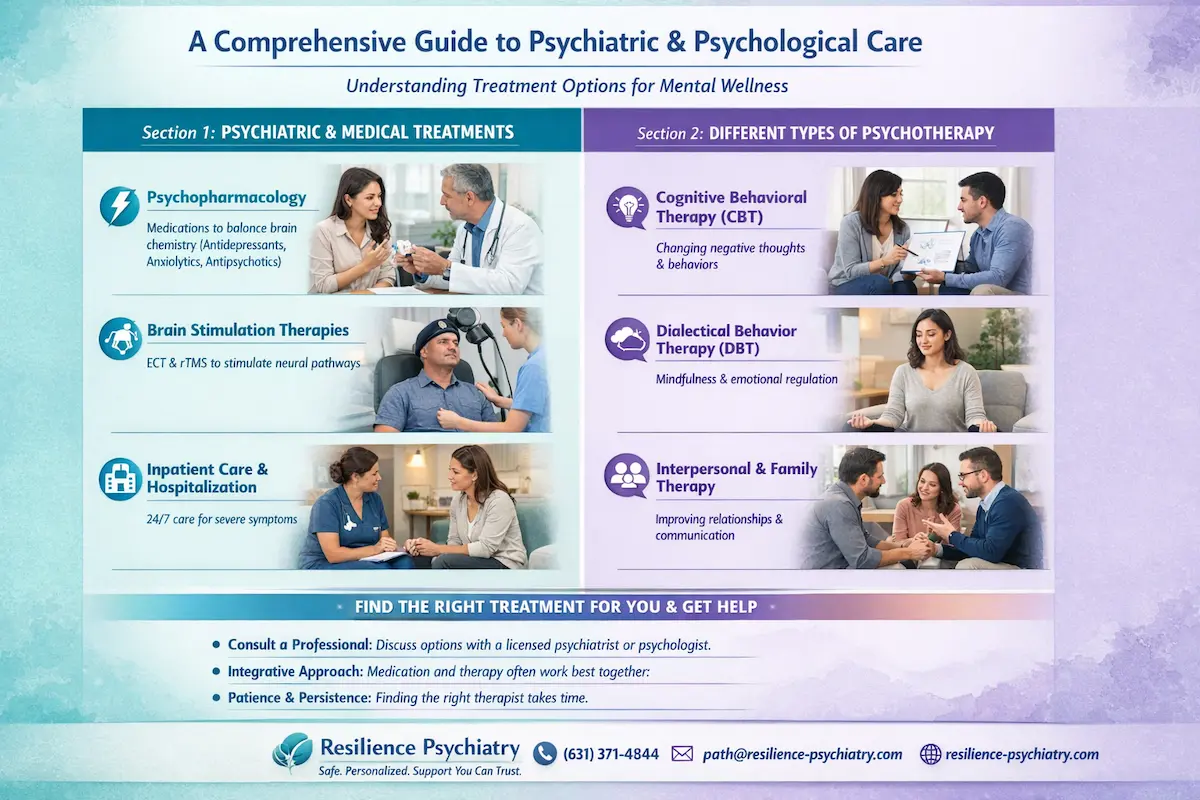
Psychiatric treatments are typically organized into a few core categories, each with a distinct purpose and method. These common psychiatric treatments include the following:
-
Psychotherapy: One-on-one or group psychiatric treatments with a trained clinician to address emotional concerns through structured conversation.
-
Medication Management: The considered use of clinical psychiatric treatments to reduce symptoms and support functioning, overseen by a prescriber.
-
Telepsychiatry: Delivering modern psychiatric treatments via secure video or phone to improve access and convenience.
-
Child Psychiatry: Developmentally informed psychiatric treatments tailored to children and adolescents, often involving caregivers.
These primary categories provide a practical framework for understanding the available psychiatric treatments that can support your well-being.
How Does Psychotherapy Support Mental Health Recovery?
As one of the most widely used psychiatric treatments, psychotherapy offers a structured, collaborative space to explore thoughts, emotions, and behaviors. During these psychiatric treatments, a therapist helps identify unhelpful patterns, teaches coping skills, and supports gradual change. Over time, these evidence-based psychiatric treatments can increase insight, reduce distress, and significantly strengthen day-to-day functioning.
If you’re ready to begin, scheduling an initial appointment is an important first step in exploring these psychiatric treatments. Resilience Psychiatry provides a range of psychotherapy approaches tailored to each person’s needs, delivered in a respectful and supportive setting.
What Role Does Medication Management Play in Treatment?
Medication management is an essential part of care for many conditions. It involves selecting appropriate medications, monitoring response and side effects, adjusting doses as needed, and educating patients about expectations. When managed carefully, medication can meaningfully reduce symptoms and help restore stability.
Which Psychotherapy Techniques Are Commonly Used in Psychiatry?
Clinicians commonly use several evidence-based psychotherapy approaches, each suited to different goals and concerns.
- Cognitive Behavioral Therapy (CBT): A structured therapy that helps people recognise and change unhelpful thoughts and behaviors.
- Integrative Psychotherapy: A flexible approach that combines techniques from multiple models to address the person’s unique needs.
These therapies focus on teaching practical skills to manage symptoms and improve functioning.
What Is Cognitive Behavioral Therapy and How Does It Work?
Cognitive Behavioral Therapy (CBT) is an evidence-based treatment that helps you identify and shift unhelpful thoughts and behaviors. By showing how thoughts shape emotions and actions, CBT teaches concrete strategies you can use in daily life. Research supports its effectiveness for conditions such as anxiety and depression.
How Do Dialectical Behavior Therapy and Other Modalities Differ?
Dialectical Behavior Therapy (DBT) is a specialized form of CBT that emphasizes skill-building in four areas: mindfulness, distress tolerance, emotion regulation, and interpersonal effectiveness. DBT places extra emphasis on managing intense emotions and improving relationships, and it is particularly helpful for people with borderline personality disorder or significant emotion-regulation difficulties.
What Are the Key Psychiatric Medication Types and Their Uses?
Psychiatric medications fall into several classes, each serving distinct clinical roles.
Medication Type Primary Uses Common Examples
Antidepressants Treat depression and anxiety disorders SSRIs, SNRIs, Tricyclics
Antipsychotics Manage symptoms of schizophrenia and bipolar disorder Risperidone, Olanzapine, Quetiapine
Mood Stabilizers Stabilize mood swings, particularly in bipolar disorder Lithium, Valproate
Anxiolytics Reduce anxiety and agitation Benzodiazepines, Buspirone
Knowing these classes can help you discuss medication options more confidently with your provider.
How Are Antidepressants Utilized in Treating Mental Health Conditions?
Antidepressants are prescribed to ease symptoms of depression and certain anxiety disorders by modulating neurotransmitter activity. They can improve mood, reduce anxiety, and support emotional stability. For many people, combining antidepressant medication with psychotherapy leads to better long-term outcomes.
What Are Antipsychotics and When Are They Prescribed?
Antipsychotic medications are used for more severe psychiatric conditions such as schizophrenia and bipolar disorder. They help reduce psychotic symptoms, like hallucinations and delusions, and can stabilize mood. Choosing and monitoring antipsychotic treatment requires close collaboration with a clinician to balance benefits and side effects.
How Is Telepsychiatry Enhancing Access to Psychiatric Treatments?
Telepsychiatry improves access by making assessment and therapy available remotely via secure video or phone. It’s especially valuable for people in rural or underserved areas, those with mobility or transportation challenges, or anyone needing more flexible scheduling. Telepsychiatry can increase convenience, support continuity of care, and lower barriers to getting help.
Growing research supports telepsychiatry’s effectiveness and its expanding role in mental health care.
Benefits and Growth of Video Telepsychiatry
Video-based telepsychiatry has expanded in response to patient demand for convenient, affordable, and accessible services; improved reimbursement; and a growing evidence base. Studies show high satisfaction among patients and providers and outcomes comparable to in-person care, with younger patients often preferring virtual visits.
Telepsychiatry today, S Chan, 2015
What Are the Benefits of Telepsychiatry for Patients in Florida?
Telepsychiatry offers several practical advantages for patients in Florida, including greater convenience and improved access to specialists regardless of location.
- Convenience: Attend appointments from home to avoid travel and reduce time away from work or family.
- Access to Comprehensive Services: Connect with clinicians and specialists who may not be available locally, expanding your treatment options.
For many people, these features make telepsychiatry a valuable option for mental health care.
How Does Telepsychiatry Integrate with Traditional Treatment Methods?
Telepsychiatry can be combined with in-person visits to create a hybrid care model. This approach maintains continuity while accommodating patient preferences and logistical needs, supporting more personalised and flexible treatment plans.
How Psychiatric Treatments Differ Between Adults and Children?
Treatment differs by age because of developmental and social factors. Children need interventions matched to their emotional and cognitive stage, and family involvement is often essential. Adults’ plans typically consider work, relationships, and other responsibilities when shaping care.
What Are the Unique Considerations in Child Psychiatry Treatments?
Child psychiatry takes into account developmental milestones, communication abilities, and family dynamics. Treatment plans are customized to a child’s needs and usually include caregivers in assessment and therapy to build a supportive recovery environment.
How Are Treatment Plans Personalized for Different Age Groups?
Treatment plans are personalised by considering age, developmental level, symptom profile, and life context. For children, this commonly means active caregiver collaboration. For adults, clinicians factor in work, family roles, and social supports when designing an effective plan.
Age Group Treatment Focus Key Considerations
Children and Adolescents Developmentally appropriate therapies, family involvement Emotional and cognitive development, communication skills, caregiver participation
Adults Symptom management, coping strategies, social and occupational functioning Work-life balance, relationships, independent decision-making
Older Adults Addressing cognitive decline, managing chronic conditions, social support Physical health, medication interactions, isolation risks
These tables summarize medication categories and age-specific treatment priorities to make psychiatric care options easier to understand.
How Can Patients Begin Their Psychiatric Treatment Journey?
Starting psychiatric care usually follows a few straightforward steps.
- Recognizing Symptoms: Notice how mood, thoughts, or behavior affect daily life and functioning.
- Booking an Appointment: Schedule an evaluation with a mental health professional to get a clear assessment and treatment recommendations.
Taking these first steps can lead to meaningful improvements in mental health and overall well-being.
What Is Involved in a Comprehensive Psychiatric Evaluation?
A comprehensive psychiatric evaluation reviews current symptoms, medical and psychiatric history, and relevant family history. The assessment supports diagnostic impressions and helps clinicians design an appropriate treatment plan.
To get started, consider scheduling an evaluation so a clinician can assess your needs and recommend a personalised strategy.
How Are Individualized Treatment Plans Developed and Managed?
Individualised treatment plans are developed collaboratively between you and your clinician. The process includes a thorough assessment, ongoing monitoring of progress, and adjustments to medications or therapies as needed. Tailoring care to each person’s circumstances increases the likelihood of effective treatment.
Personalizing mental health interventions has long been a core principle in clinical practice.
Personalized Mental Health Interventions Explained
The practice of aligning mental health interventions with a patient’s unique characteristics, needs, and circumstances has been discussed in the field for decades (e.g., Howard et al., 1996; Lambert et al., 2001; Paul, 1967). Personalizing treatment is a routine part of clinical decision-making when practitioners determine the best plan for an individual patient.
Treatment Personalization and Precision Mental Health Care: Where are we and where do we want to go?, D Moggia, 2024
If you have questions or would like to learn more about our services, please contact us today.
Frequently Asked Questions
What should I expect during my first psychiatric appointment?
Your first appointment typically includes a comprehensive assessment of mental health history, current symptoms, and relevant medical information. The psychiatrist may ask about family history, daily functioning, and lifestyle to build a complete picture. This intake guides a personalised treatment plan, being open and honest helps your clinician provide the best care.
How long does psychiatric treatment typically last?
Duration varies by diagnosis, symptom severity, and chosen interventions. Some people experience improvement after short-term therapy over several weeks, while others need longer-term treatment lasting months or years. Regular reviews with your provider help determine the appropriate timeframe and any needed changes.
Are there any side effects associated with psychiatric medications?
Psychiatric medications can cause side effects that differ by drug and individual. Common effects include weight changes, fatigue, nausea, or shifts in mood. Discuss potential risks with your clinician before starting medication; they can recommend strategies to manage side effects and adjust treatment if necessary.
How can I support a loved one undergoing psychiatric treatment?
Support your loved one by listening without judgment, offering patience, and encouraging adherence to treatment. You can offer to accompany them to appointments if they wish and learn about their condition. Practical and emotional support from family and friends can make a meaningful difference in recovery.
What are the signs that I should seek psychiatric help?
Consider seeking psychiatric help if you have persistent sadness or anxiety, noticeable mood or behavior changes, difficulty concentrating, social withdrawal, or changes in sleep or appetite. If these symptoms interfere with daily life or relationships, consult a mental health professional. Early intervention often leads to better outcomes.
Can I combine psychotherapy with medication management?
Yes. Combining psychotherapy with medication management is a common, evidence-based approach. Therapy addresses underlying patterns and builds coping skills, while medication can reduce symptoms. Together they offer a comprehensive, personalised treatment plan. Discuss options with your provider to find the best combination for you.
What should I do if I feel my treatment is not working?
If you feel your treatment isn’t helping, share your concerns with your clinician. They can reassess progress and adjust the plan, this might include changing medications, modifying therapy techniques, or exploring alternative treatments. Open communication is key to refining your care and finding a more effective approach.
Start With a Conversation
Whether you are seeking answers for yourself or someone you love, a psychiatric evaluation is the first step toward clarity. Our team provides compassionate, evidence-based care in Setauket, NY and via telehealth across New York and Florida.
Resilience Psychiatry | Setauket, NY | Serving New York and Florida via Telehealth