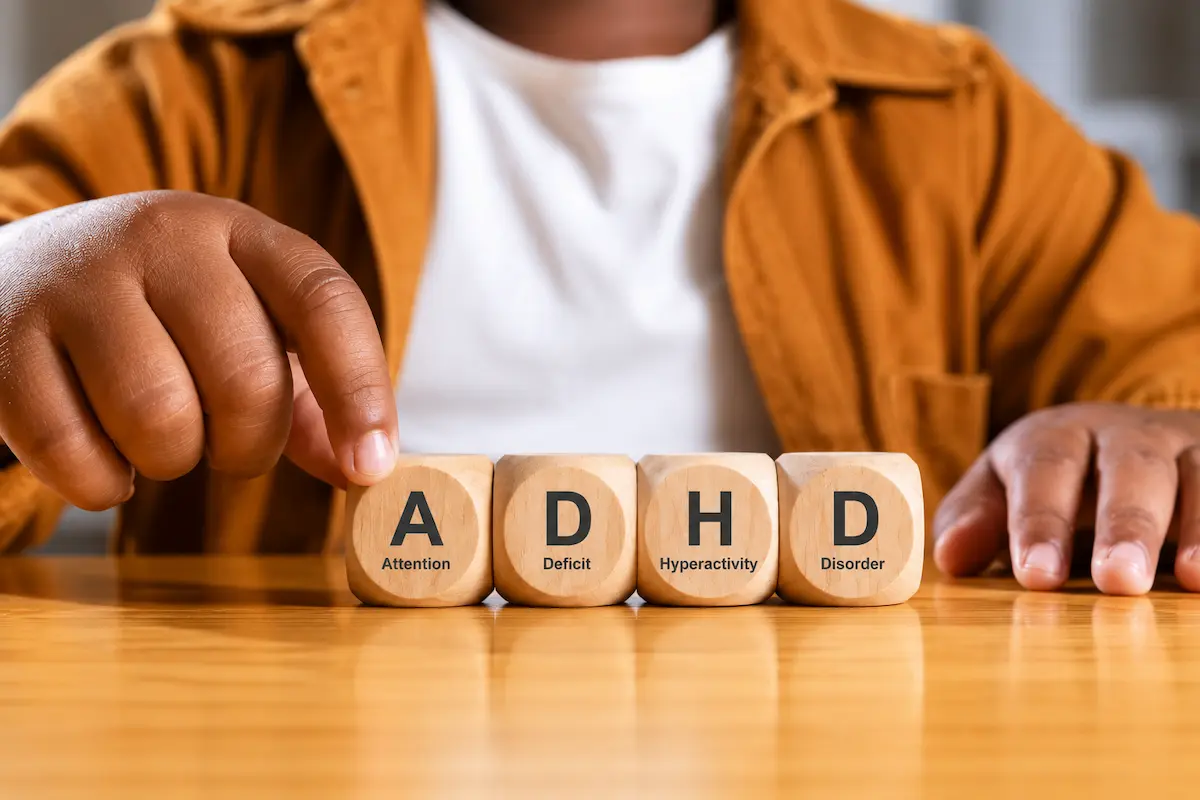
If you have ever wondered why a competent, articulate, hardworking woman can quietly fall apart trying to manage a basic calendar, you may already be familiar with the hidden presentation of ADHD in adult women. For decades, attention-deficit/hyperactivity disorder was framed strictly as a behavioral condition of disruptive boys in elementary school classrooms. That historical framing is now globally recognized to be completely wrong, and it has left an entire generation of girls undiagnosed, chronically exhausted, and convinced they are simply “bad at adulting.” At Resilience Psychiatry in East Setauket, we conduct specialized clinical evaluations for patients in their 20s, 30s, 40s, and beyond who are finally seeking an accurate medical explanation for ADHD in adult women.
Why ADHD in Adult Women Is So Often Missed
According to the NIMH, ADHD must have started before age 12 to qualify for an adult diagnosis. That criterion is medically correct but it has historically been applied through a lens biased toward how the disorder presents in boys.
CHADD describes the result plainly: girls are diagnosed with ADHD at just under half the rate boys are; in adulthood, women and men are diagnosed at roughly equal rates. That massive diagnostic gap spanning a decade or more defines the late-diagnosis phenomenon of ADHD in adult women.
Girls and women are more likely to have a predominantly inattentive presentation. There is no externally disruptive behavior. Instead there is daydreaming, slow task initiation, lost homework, social drift, and a constant background hum of effort to “keep up.” Bright girls especially can mask for years because their intelligence absorbs the cost they get the grades but pay in evenings, weekends, anxiety, and self-criticism.
What ADHD in Adult Women Actually Looks Like
During our structured adult diagnostic evaluations, the cognitive and emotional patterns we observe regarding ADHD in adult women include:
-
Time Blindness: Being either anxiously early or chronically late for appointments, with an absolute inability to accurately measure the passage of minutes.
-
Working Memory Leaks: Consistently walking into rooms and forgetting the initial intent, misplacing household keys, and missing dates she genuinely intended to keep.
-
Executive Task Paralysis: Knowing exactly what project needs completion, wanting desperately to execute it, yet remaining completely frozen at her desk for hours.
-
Rejection Sensitive Dysphoria (RSD): Experiencing a intense, highly painful emotional reaction to perceived criticism or minor social slights that proves exceptionally difficult to shake off.
-
Backfiring Hyperfocus: Becoming so completely absorbed in a singular, high-interest task for six hours straight that she has zero neurological bandwidth left for the rest of her day.
-
Symmetry Discrepancies: A private domestic space, car interior, or digital inbox in complete disarray that directly contradicts how polished, organized, and capable she appears to colleagues in a corporate setting.
Untreated symptoms of ADHD in adult women carry a heavy secondary mental health toll. The Centers for Disease Control and Prevention (CDC) notes that the condition frequently co-occurs with mood disturbances. When clinicians leave ADHD in adult women untreated, patients experience significantly higher lifetime rates of chronic generalized anxiety, treatment-resistant depression, persistent sleep architecture fragmentation, and maladaptive substance use patterns.
Hormones, Perimenopause, and the Mid-Life Surge in Diagnosis
Many patients can pinpoint the exact developmental milestone where their coping strategies collapsed: immediately following the birth of a child, after stepping into a highly demanding professional promotion, or during their late 30s and 40s. CHADD highlights this direct relationship in its clinical research regarding neurosteroids and ADHD in adult women across the lifespan.
Estrogen plays an active role in modulating dopamine signaling and availability in the prefrontal cortex. As circulating estrogen levels fluctuate and drop during the perimenopausal transition, the sudden chemical withdrawal amplifies executive dysregulation. Symptoms that a woman had quietly over-compensated for with sheer willpower suddenly become unmanageable, making mid-life the most common diagnostic window for ADHD in adult women to finally seek professional intervention.
Evidence-Based Treatment Options for ADHD in Adult Women
| Modality Type | Clinical Targets & Mechanism | Expected Outcomes |
| Targeted Pharmacotherapy | First-line central nervous system stimulants or tailored non-stimulant selective norepinephrine reuptake inhibitors. | Optimizes prefrontal cortex dopamine levels to clear task paralysis and memory leaks. |
| ADHD-Adapted CBT | Structured individual psychotherapy focusing entirely on executive restoration and cognitive remodeling. | Dismantles the toxic “inner critic” patterns born from years of late-stage diagnosis. |
| Executive Coaching | External accountability structures, tactical organization tools, and deliberate body-doubling systems. | Circumvents working memory deficits by mapping out visible, concrete daily routines. |
A successful medical care plan for ADHD in adult women must always be layered. If a patient presents with co-occurring clinical anxiety, perimenopausal mood changes, or depression, our providers treat these conditions in a parallel, integrated framework to achieve long-term cognitive stabilization.
Treatment Options That Actually Help
Effective treatment is almost always layered, not a single intervention.
- Medication. Stimulants (methylphenidate- and amphetamine-class) remain the most effective single intervention for adult ADHD. Non-stimulants (atomoxetine, viloxazine, certain alpha-agonists) are good options for women who cannot tolerate stimulants or have anxiety histories. We handle this through structured medication management with close follow-up.
- Psychotherapy. Cognitive-behavioral therapy adapted for adult ADHD is well-supported. It targets executive function (planning, organizing, follow-through) and the inner-critic patterns that develop after years of underdiagnosis. We offer individual psychotherapy alongside medication when indicated.
- Coaching and skills work. External structures, written systems, visible reminders, body-doubling compensate for the working-memory gap.
- Treating co-occurring conditions. If depression, anxiety, or perimenopausal symptoms are present, they get treated in parallel.
Telehealth Makes the First Step Easier
Many women have postponed an evaluation for years because the appointment itself feels like one more executive-function task. Resilience Psychiatry offers secure telepsychiatry across New York and telepsychiatry across Florida, with in-person care available at our East Setauket office on Long Island. For many patients, a virtual first visit is the lowest-friction way to begin.
When to Consider an Evaluation
If you have spent your adult life suspecting that “regular life” takes more effort for you than the people around you, that is worth investigating. ADHD is highly treatable. The combination of accurate diagnosis, evidence-based medication, and CBT-adapted therapy can change a life that feels like white-knuckling into one that feels available.
Frequently Asked Questions
Can you suddenly develop new-onset ADHD in adult women during mid-life?
No. ADHD is fundamentally a neurodevelopmental condition that must be present during early childhood. What frequently occurs with ADHD in adult women is that the underlying symptoms were present all along but went entirely unrecognized because the patient used intense masking and intelligence to compensate until adult lifestyle complexities finally overwhelmed her capacity.
Why do diagnostic statistics show that ADHD in adult women is identified so much later than in men?
Women more often have the inattentive presentation, which is quieter and easier to miss. Bright girls compensate with effort, and parents and teachers tend to look for disruptive symptoms more typical in boys. CHADD documents that the diagnosis gap closes in adulthood meaning the disorder was there, it just was not seen.
Can ADHD symptoms get worse in your 30s or 40s?
Yes. Increased life complexity (children, leadership roles, aging parents) plus estrogen changes during perimenopause can unmask symptoms that were previously manageable. This is one of the most common windows for a first adult diagnosis.
Do I need a stimulant to treat ADHD?
Not necessarily. Stimulants are first-line and the most effective single intervention, but non-stimulant options exist and are appropriate for some patients. Treatment decisions are individualized based on history, medical conditions, and patient preference.
Can ADHD be treated via telepsychiatry?
Yes, evaluation and ongoing medication management can be conducted via secure telepsychiatry, including for residents of New York and Florida. Certain controlled-substance prescribing rules may apply, and we explain these clearly at the first visit.
How long is an adult ADHD evaluation?
At Resilience Psychiatry, an initial adult psychiatric evaluation is 60–90 minutes and includes structured interview, validated rating scales, medical and family history, and differential diagnosis.
Take the Next Step
If you suspect undiagnosed ADHD, the next step is a proper psychiatric evaluation, not another self-help book. Contact our East Setauket office or book directly online to schedule with a board-certified psychiatrist.