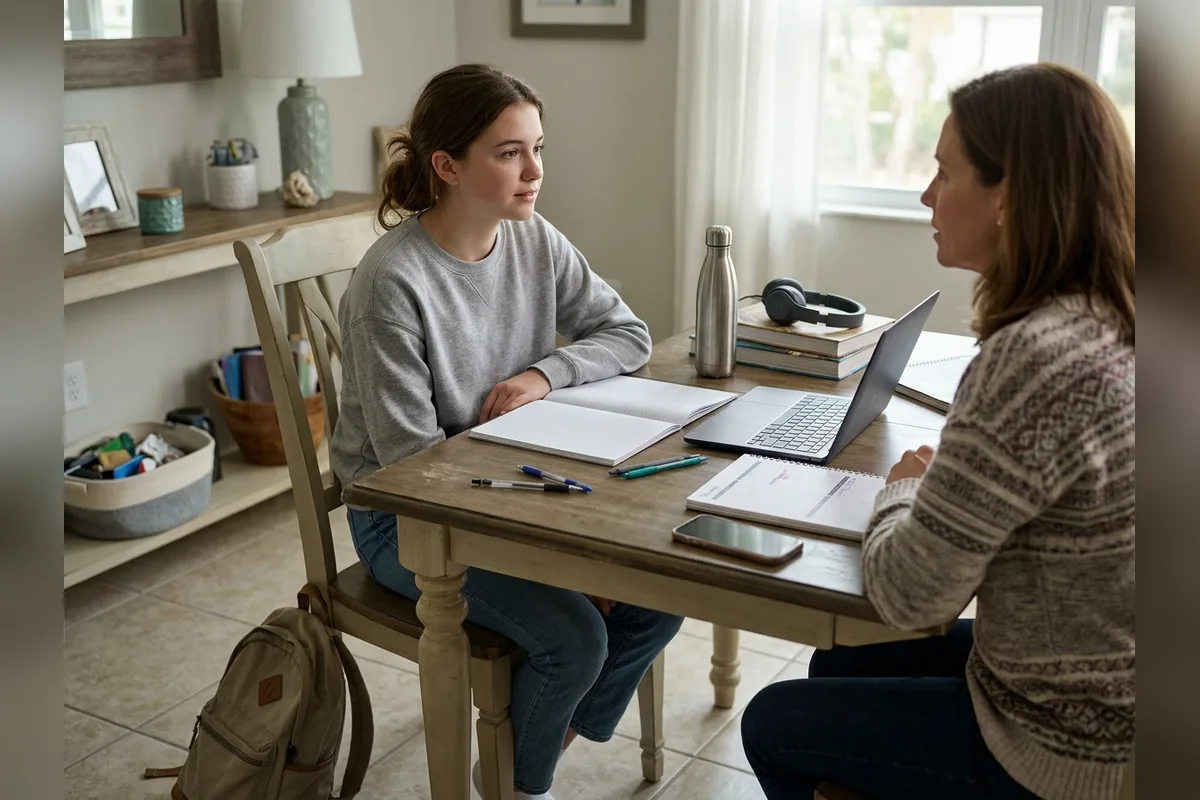
The first weeks of college run on adrenaline: new friends, new freedom, the dining hall still feels like an adventure. Then October arrives. Classes get harder, the social picture settles, midterms loom, and your freshman starts calling home in tears. If that sounds familiar, you are not alone, and neither is your student.
The question parents wrestle with in October is a real one: is this normal homesickness that will pass, or something more? This guide will help you tell the difference, support your student well, and know when professional help is warranted.
If You Need Urgent Help
If you or someone you love is in danger, call or text 988 to reach the 988 Suicide & Crisis Lifeline, or call 911. Resilience Psychiatry is not an emergency service.
This article is educational and is not a substitute for care from a licensed clinician.
Why October Is the Hardest Month
The college transition follows a rough pattern. September is the honeymoon: everything is new and exciting. By October, the novelty wears off and the demands pile up at the same time. Academic pressure increases just as the social landscape solidifies, which can leave students who have not found their group feeling left behind. Shorter days and less sunlight do not help.
This timing is normal, and it is also why October is worth watching closely. A rough patch that steadily improves is one thing. A rough patch that deepens week after week is another.
Normal Transition Signs
Most first-year students experience some version of the following, and most move through it:
- Missing home, high school friends, and family routines.
- Occasional tearfulness, especially in the first weeks.
- Wanting to come home on weekends early in the semester.
- Mild disruptions to sleep or appetite that settle as routines form.
- Moments of doubt ("Did I pick the right school?") that come and go.
The key feature of normal adjustment is direction: hard days mixed with good ones, and a gradual trend toward settling in.
Warning Signs It May Be Something More
Consider professional help when you notice:
- Symptoms persisting two or more weeks without improvement, or steadily getting worse.
- Sleep or appetite disruption that does not resolve: insomnia, sleeping all day, significant weight change.
- Missing classes or falling behind academically, especially for a student who was previously engaged.
- Withdrawing from friends, activities, or family contact.
- Persistent hopelessness, tearfulness most days, panic attacks, or inability to function.
- Any talk of self-harm or suicide. Treat this as urgent: call or text 988 immediately.
Trust your instincts as a parent. You know your child's baseline. If what you are seeing does not look like them, that observation matters. Our guide to signs it may be time to see a psychiatrist covers these thresholds in more detail.
How Parents Can Help Without Over-Fixing
Your impulse will be to fix it. Sometimes the most helpful thing is to steady yourself first, because your student is reading your anxiety as closely as you are reading theirs.
- Validate, do not catastrophize. "It makes sense that this is hard. The first semester is a lot." Avoid both "You will be fine, stop worrying" and "This sounds terrible, should I come get you?"
- Ask what kind of support they want. Some students want advice; most want to be heard first. "Do you want me to just listen, or help you think through options?" is a powerful question.
- Encourage one small anchor. One club, one study group, one routine. Belonging usually starts with a single connection, not a transformed social life.
- Keep communication steady but not constant. A regular call rhythm beats anxious check-ins every few hours. Let them initiate sometimes.
- Do not rush to bring them home every weekend. Occasional visits are fine and healthy. But constant escapes can delay the settling process. Help them build a life where they are, not just endure until Friday.
When to Seek Professional Help
If warning signs persist or your student's daily functioning is affected, it is time to involve a professional. Most campuses have counseling centers, which are a good first stop for short-term support. A psychiatrist becomes appropriate when there may be an underlying condition, such as depression or an anxiety disorder, that needs full evaluation.
One practical option many families do not know about: a student attending school anywhere in New York can access psychiatric care via telepsychiatry, even if home is hours from campus. That means your student does not have to choose between the campus counseling center's waitlist and waiting until Thanksgiving break. For more on how the formats compare, see telehealth vs in-person psychiatry.
Start With a Conversation
Resilience Psychiatry welcomes new patients at our East Setauket office, serving families across Suffolk County and Long Island, with telepsychiatry available across New York for students away at school. To request an initial consultation, book through Zocdoc or call (631) 371-4844. Care is available in English and Spanish. Please note that Resilience Psychiatry is an out-of-network practice.
Office: 46 NY-25A, Suite 4, East Setauket, NY 11733
Frequently Asked Questions
How long does college homesickness usually last?
It varies widely. Many students turn a corner within the first semester as routines and friendships form. If there is no improvement after several weeks, or things are getting worse rather than better, that is the point to seek help rather than wait it out.
Should I let my child come home every weekend?
Occasional weekend visits are healthy. But if every weekend becomes an escape, it can prevent your student from building the connections that make campus feel like home. Aim for balance: some weekends home, most weekends building a life at school.
When should I worry about my college student's mental health?
Use the two-week rule: persistent symptoms for two or more weeks, functional impact (missing class, withdrawing, grades dropping), or any safety concern. Hopelessness, panic, or talk of self-harm always warrant immediate action: call or text 988.
Can my college student see a psychiatrist while away at school?
Yes. Students located in New York can be seen via telepsychiatry, and many families combine virtual visits during the semester with in-person appointments during breaks. When you contact the office, mention that your student is away at school so scheduling can account for it.
What if my child refuses help?
Keep the door open without forcing it. Share your concern plainly: "I am worried about you, and I want you to have support." Offer options rather than ultimatums: campus counseling, a single consultation, or a parent consultation where you can get guidance on next steps. Sometimes a first appointment framed as "just a conversation" is easier to accept.
Is it normal for sophomores and juniors to struggle too?
Yes. Transitions recur: harder coursework, changing friend groups, internship pressure, questions about majors and careers. The same framework applies at any stage: watch the trend, note functional impact, and seek help when struggles persist. If you or someone you love is in crisis, call or text 988 at any time. More resources are listed on our crisis resources page.