By the time Memorial Day passes on Long Island, the calendar at home looks like a tangle. Field day, end-of-year recitals, the last few final projects, sports tournaments, the awkward push toward summer plans, camps, daycare, work schedules, and the long, uncertain stretch of June, July, and August.
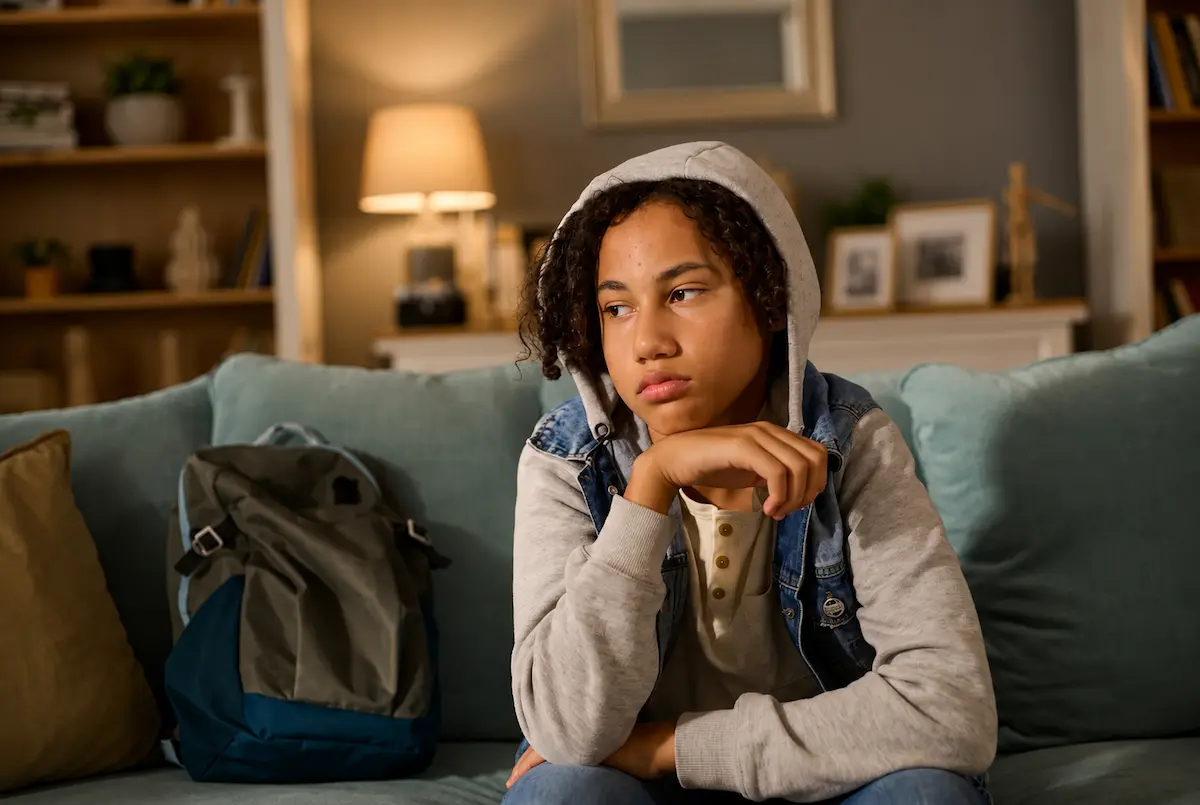
Most parents in Suffolk County expect their kids to be excited about all of it. Many kids are. But every June at our East Setauket office, we also see a steady wave of children experiencing intense end of school year anxiety that gets noticeably worse as the school year wraps up, not better. It brings stomach aches at drop-off, trouble sleeping, increased clinginess, meltdowns over small things, and school refusal in the final two weeks. Once school is actually out, it can bring a surprising spike in worry, irritability, or sadness.
If you have a child who seems to be unraveling rather than relaxing as June goes on, you are not imagining it. Dealing with end of school year anxiety is one of the most predictable mental health hurdles for kids, and there are concrete, evidence-based things that help.
Why the Transition Triggers End of School Year Anxiety in Kids
The reflexive parent assumption is that kids should love the end of the term. No homework, no bus, beach days, and sleeping in. That is true for some. For others, especially kids with anxious temperaments, the loss of structured time is the root problem, not the solution.
The American Academy of Child and Adolescent Psychiatry (AACAP) notes that predictability and routine are protective for children with mental health struggles. The academic schedule has both: the same bell schedule, the same teachers, the same lunch hour, and the same kids in the same classroom. Even children who complain about classes find comfort in knowing exactly what comes next.
When the term ends, that comfort is gone. Summer might mean five different camps over eight weeks, a parent’s changed work schedule, grandparents visiting, a move, or a trip to family in another state. For an anxious child, the unknown is a threat. This transition naturally fuels end of school year anxiety because the freedom of summer is the unknown of summer.
The National Institute of Mental Health (NIMH) reports that approximately one in three adolescents in the United States will experience an anxiety disorder at some point. The most common types in childhood are separation anxiety, generalized anxiety disorder, and social anxiety disorder. Each of these can flare into severe end of school year anxiety in the final weeks of school and the first weeks of summer for highly predictable reasons.
The 5 Most Common Patterns of End of School Year Anxiety
After years of treating children and adolescents in East Setauket and across the Three Village area, our specialists see the same behavioral tracks repeat every June as end of school year anxiety takes hold:
1. Loss of Routine Anxiety
Bedtime falls apart, structured wake-up times disappear, meals get random, and screen time spikes. For some kids, this is fine. For a child with end of school year anxiety, the absence of structure feels like floating without a tether. The result is often increased irritability, more meltdowns, and worse sleep.
2. Anticipatory Camp Anxiety
Parents sign their child up for camp because they need childcare. The child knows camp is coming and starts rehearsing every possible thing that could go wrong. Will the bus driver know where I sit? What if I do not have a friend? What if I have to use the bathroom? What if it rains? This subset of end of school year anxiety can begin in early June and intensify daily until the first day of the program.
3. Friendship Cliff Anxiety
The school year provides daily proximity to peers. Summer scatters everyone. Some kids will see their best friend only three times in two months. Younger children may lack the social skills to maintain friendships at a distance. Older kids and adolescents can spiral into end of school year anxiety driven by the worry that they will be forgotten or replaced.
4. Family Friction Anxiety
When parents work and children are home, schedules collide and tempers shorten. Discipline patterns that worked during the school term stop fitting. Children pick up on family tension, even when adults are sure they are hiding it well, which manifests as internalized end of school year anxiety or acting out.
5. Separation Anxiety Resurgence
For children who already struggle with separation, the changes of summer can revive an issue that seemed mostly resolved. Going to a sleepover camp, spending the day with a grandparent, or a parent traveling for work can reopen the worry that something bad will happen while the parent is away, causing end of school year anxiety to spike.
How End of School Year Anxiety Shows Up in Children
The textbook description of anxiety, racing thoughts, restlessness, and persistent worry, applies more cleanly to adolescents and adults than to younger children. In elementary-aged kids, end of school year anxiety often shows up in the body and in outward behaviors.
Common Physical Signs:
-
Unexplained stomach aches and frequent headaches
-
Persistent fatigue or morning nausea before predictable events
-
Frequent trips to the bathroom or changes in appetite
-
Trouble falling asleep, staying asleep, or frequent nightmares
Common Behavioral Signs:
-
Increased irritability, sudden tantrums, or meltdowns over small things
-
Refusal to attend social things they used to enjoy
-
Perfectionism, excessive reassurance seeking, and intense clinginess
-
Regressive behaviors like wanting to sleep in the parent’s bed again
Common Social Signs:
-
Withdrawal from local neighborhood friends
-
Declining birthday party invitations or playdates
-
A quietness or emotional flatness that does not match the child’s normal personality
If you are seeing two or three of these signs intensifying in late May or June, it is a strong signal that your child is struggling with end of school year anxiety.
What Parents Can Do to Minimize End of School Year Anxiety
There are several practical steps that help most anxious children navigate the end of classes and the start of the summer transition:
-
Keep a Recognizable Rhythm: The full school routine cannot continue, but the bones of a routine can. Wake within a one-hour window, eat meals at roughly the same time, and maintain a consistent bedtime. The brain of a child experiencing end of school year anxiety relaxes when it knows what comes next.
-
Map the Summer Out Loud: For elementary kids and adolescents, knowing the shape of the next eight weeks reduces end of school year anxiety significantly. A simple visual calendar on the fridge with weeks of camp, weeks at home, weekend plans, and trips makes the unknown smaller.
-
Preview Transitions: The day before a new camp starts, drive past the facility. Talk through exactly how drop-off will work, pack the bag together the night before, and lay out their clothes. Anticipatory end of school year anxiety is reduced by mental rehearsal.
-
Name What You See: Children often do not know that what they are feeling has a name. “It looks like your tummy hurts every Sunday night before camp week. That is sometimes how the body shows when we are nervous about a new thing. That is normal, and we can talk about it.” Naming the source of their end of school year anxiety lowers its volume.
-
Hold the Line on Limits with Warmth: Anxious children often pull for accommodations that, in the long run, deepen their struggles. Skipping the camp, sleeping in the parent’s bed every night, or avoiding a friend’s house feels kind in the moment, but over time, it teaches the child that they cannot handle the thing, which increases future end of school year anxiety.
-
Protect Sleep: Rest is a powerful natural intervention for childhood distress. Turn screens off at least an hour before bed and keep a cool, dark, predictable room. If sleep is breaking down, that is a clear signal that end of school year anxiety requires professional attention.
When to Reach Out for Professional Help
Some end of year anxiety is expected and passes within two to three weeks of school ending. Other times, the symptoms get worse, not better, and start to interfere with the child’s daily life. The American Psychological Association and the AACAP both suggest considering professional evaluation when one or more of the following is true.
Anxiety symptoms last more than two to four weeks and are not improving.
The child is refusing to attend things they previously enjoyed, like camp, family events, friends’ houses, or sports.
Physical symptoms (stomach aches, headaches, fatigue) are persistent and unexplained by a pediatric workup.
Sleep is significantly disrupted for more than two weeks.
The child is talking about not wanting to be alive, even in passing or in joking tones. This is always worth taking seriously. If your child is expressing thoughts of suicide or self harm, call or text 988, the , go to your nearest emergency department, or visit our immediately.
Anxiety is interfering with the family’s ability to function, with marriages, siblings, or work obligations.
At Resilience Psychiatry, we treat at our East Setauket office and through telehealth where appropriate. Initial evaluations for children are scheduled with a child and adolescent specialist and last about an hour. They include a conversation with the parents, time with the child, and a careful look at school context, sleep, medical history, family history, and the developmental picture.
From there, depending on what we find, the treatment plan may involve , , or both. For mild to moderate anxiety in children, evidence based therapy alone is often the first line. For more severe symptoms, the combination produces better outcomes faster.
What to Expect From a Child Psychiatric Evaluation
Parents often arrive worried that an evaluation will scare the child or label them. Neither is true in our practice. We talk to the child at their developmental level, in language they understand. We do not lead with the word psychiatrist if the child is young. We frame the visit as a chance to talk with someone who helps kids who get worried tummies or who have a hard time at bedtime.
We also believe strongly that children are not the project. The whole family is the project. The plan we build will include things you can do at home, things the school can do, things a therapist can do, and, when appropriate, medication. None of it happens without your input and consent.
A Note for Bilingual Long Island Families
Many families in Suffolk County and the rest of New York would prefer to have a medical conversation about their child in Spanish, especially when grandparents or extended family are involved. Our practice serves families in English and Spanish. The clinical work is the same; the language is yours to choose.
Take the Next Step
End of school year anxiety is real, it is common, and it responds well to early attention. The longer it goes unaddressed, the more it can shape the way a child relates to school, friendships, and new experiences over time.
If your child has been showing the signs in this article for more than a couple of weeks, to schedule a child and adolescent psychiatric evaluation. We see families from East Setauket, Stony Brook, the Three Village area, and across Long Island in person, and the rest of New York through .
The summer ahead can be steady and good, not stressful and avoided. We will help you build the plan that gets you there.