Anxiety disorders affect millions and can make work, relationships, and everyday routines harder to manage. Thoughtful psychiatric care helps people regain stability and improve how they function day to day. This article reviews evidence‑based treatments, practical coping strategies, and support resources for managing anxiety. We summarize approaches — including medication management and cognitive behavioral therapy — so you can see what reduces symptoms and what ongoing, patient‑centered care typically looks like.
Treatment Options for Anxiety Disorder
Effective care for anxiety most often combines psychotherapy, medication management, and lifestyle measures. Each component has distinct benefits and can be tailored to a person’s needs.
- Psychotherapy: Evidence‑based therapies—most notably Cognitive Behavioral Therapy (CBT)—help people spot and change unhelpful thinking and behavior patterns that maintain anxiety.
- Medication Management: Commonly used medications include selective serotonin reuptake inhibitors (SSRIs). When needed for short periods and under close supervision, benzodiazepines can relieve acute symptoms.
- Lifestyle Modifications: Practices such as mindfulness, regular exercise, consistent sleep, and a balanced diet support mental health and enhance the effects of clinical treatment.
| Treatment Type | Description | Benefits |
|---|---|---|
| Psychotherapy (CBT) | Helps identify and shift unhelpful thoughts and behaviors. | Reduces symptoms and improves coping skills. |
| Medication Management | Use of SSRIs and, when appropriate, short‑term benzodiazepines under supervision. | Stabilizes mood and relieves acute symptoms. |
| Lifestyle Modifications | Mindfulness, exercise, improved sleep, and dietary changes. | Supports overall mental health and treatment outcomes. |
At Resilience Psychiatry, we create individualized treatment plans that combine these elements to deliver coordinated, comprehensive care.
Support Mechanisms for Anxiety Disorder
Ongoing support is a central part of recovery. Regular contact with clinicians and access to resources keep patients engaged in care and allow timely adjustments when needed.
- Importance of Ongoing Support: Routine follow‑ups and check‑ins let clinicians track progress, manage side effects, and refine the plan over time.
- Comprehensive Evaluations: Detailed assessments ensure the treatment matches the patient’s current symptoms, history, and life circumstances.
- Bilingual Care Options: Offering services in multiple languages reduces barriers and makes care more accessible to diverse communities.
Scheduling appointments with Resilience Psychiatry connects you to these support systems and ensures coordinated, patient‑focused care.
Strategies for Managing Anxiety Disorder
Clinical treatment works best when paired with practical self‑management. Simple, consistent strategies can lessen symptoms and improve daily functioning.
- Identifying Triggers: Learning the situations, thoughts, or patterns that spark anxiety helps you anticipate and respond more effectively.
- Building Coping Skills: Techniques such as paced breathing, guided relaxation or meditation, grounding exercises, and journaling can reduce anxiety in the moment.
- Family Support Involvement: Involving trusted family members or caregivers provides emotional support, reinforces coping strategies, and improves adherence to treatment.
Used alongside clinical care, these strategies often lead to meaningful symptom relief and a better quality of life.
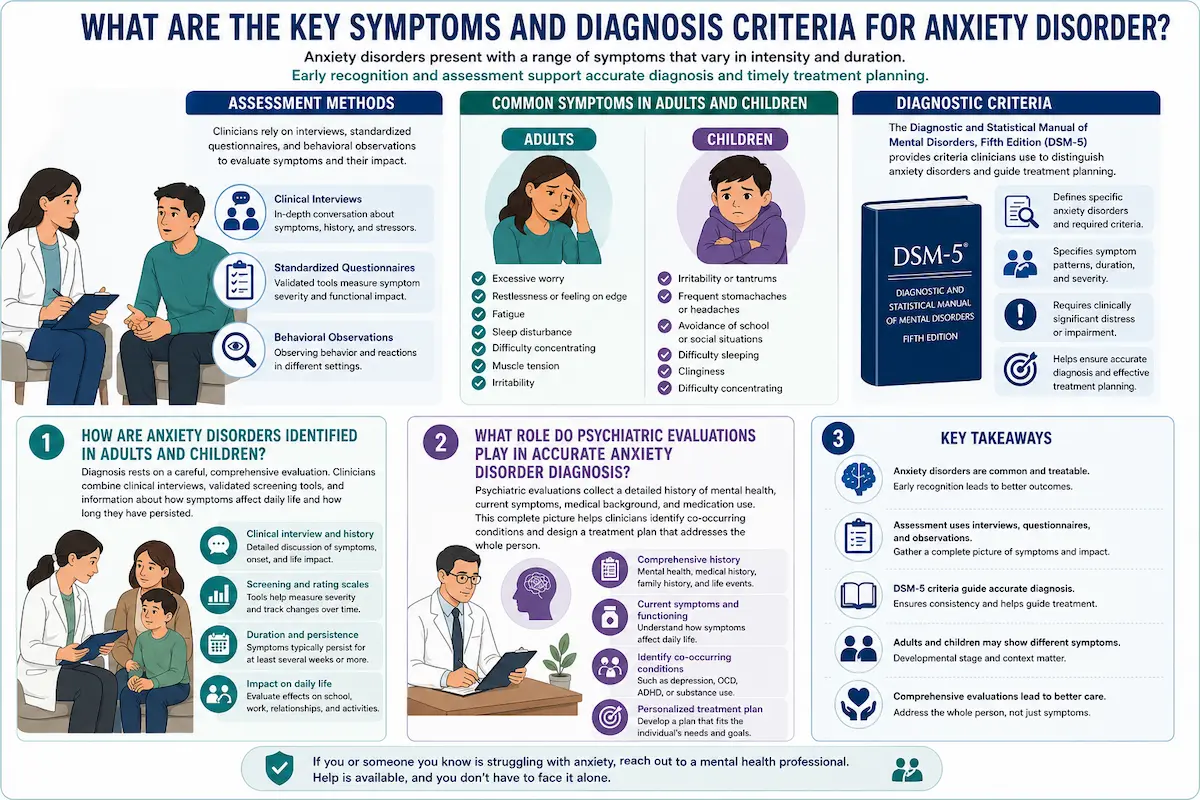
What Are the Key Symptoms and Diagnosis Criteria for Anxiety Disorder?
Anxiety disorders present with a range of symptoms that vary in intensity and duration. Early recognition and assessment support accurate diagnosis and timely treatment planning.
- Assessment Methods: Clinicians rely on interviews, standardized questionnaires, and behavioral observations to evaluate symptoms and their impact.
- Common Symptoms in Adults and Children: Adults often report excessive worry, restlessness, fatigue, sleep disturbance, and difficulty concentrating. In children, anxiety may show up as irritability, frequent stomachaches or headaches, or avoidance of social or school situations.
- Diagnostic Criteria: The Diagnostic and Statistical Manual of Mental Disorders, Fifth Edition (DSM‑5) provides criteria clinicians use to distinguish anxiety disorders and guide treatment planning.
How Are Anxiety Disorders Identified in Adults and Children?
Diagnosis rests on a careful, comprehensive evaluation. Clinicians combine clinical interviews, validated screening tools, and information about how symptoms affect daily life and how long they have persisted.
What Role Do Psychiatric Evaluations Play in Accurate Anxiety Disorder Diagnosis?
Psychiatric evaluations collect a detailed history of mental health, current symptoms, medical background, and medication use. This complete picture helps clinicians identify co‑occurring conditions and design a treatment plan that addresses the whole person.
Which Medication Management Options Are Effective for Treating Anxiety Disorder?
Medications are an important part of care for many people with anxiety. When chosen and monitored carefully, they can reduce symptoms and improve functioning.
- Commonly Prescribed Medications: SSRIs (for example, fluoxetine and sertraline) are widely used because of their proven benefits and tolerability. Benzodiazepines may be prescribed short‑term for rapid relief under close supervision.
- Benefits of Medication Management: Medications can stabilize mood, lessen anxiety, and improve the ability to engage in therapy and daily activities.
- Monitoring and Follow‑Up: Regular follow‑up visits are essential to assess response, manage side effects, and adjust dosage or medication when needed.
| Medication | Type | Use | Benefits |
|---|---|---|---|
| Fluoxetine (Prozac) | SSRI | Long‑term management of anxiety | Helps reduce persistent anxiety by influencing serotonin pathways |
| Sertraline (Zoloft) | SSRI | Treats a range of anxiety disorders | Proven efficacy and good tolerability |
| Lorazepam (Ativan) | Benzodiazepine | Short‑term relief of acute anxiety | Provides rapid symptom relief when used under supervision |
When used appropriately and monitored closely, these medications can be a key part of a comprehensive treatment plan. In some cases clinicians consider combination strategies, particularly when anxiety co‑occurs with depression.
Combination Medication for Anxiety and Depression
Combination approaches using SSRIs or SNRIs alongside short‑term benzodiazepines have been explored for patients with comorbid anxiety and depression, as reviewed in a 2008 study.
How Long Does It Take for Anxiety Disorder Medications to Show Effectiveness?
Response times vary. SSRIs typically take about four to six weeks before noticeable improvement, while benzodiazepines can relieve acute symptoms quickly. Regular follow‑up helps clinicians evaluate response and make changes as needed.
How Does Cognitive Behavioral Therapy Support Anxiety Disorder Treatment?
Cognitive Behavioral Therapy (CBT) is a well‑validated psychotherapy that effectively treats many anxiety disorders.
Research has examined CBT components—such as exposure and cognitive restructuring—and their roles in reducing symptoms of conditions like social anxiety disorder.
Exposure & Cognitive Restructuring for Social Anxiety Disorder
Analyses using latent change models found that both exposure and cognitive restructuring reduced social anxiety symptoms. Exposure showed somewhat stronger effects, and combining both techniques did not always outperform either alone.
What works in preventing emerging social anxiety: Exposure, cognitive restructuring, or a combination?, B de Mooij, 2023
- Techniques Used in CBT: CBT uses cognitive restructuring, exposure therapy, and skills training to help patients face fears, test unhelpful beliefs, and build practical coping strategies.
- Effectiveness of CBT: A robust evidence base shows CBT reduces anxiety symptoms and strengthens coping across age groups.
- Integration with Other Therapies: Combining CBT with medication management can produce faster and more durable improvement, offering both symptom relief and long‑term skills.
What Are the Principles of Cognitive Behavioral Therapy for Anxiety Disorder?
CBT rests on the idea that thoughts, feelings, and behaviors are connected. By identifying and challenging unhelpful thoughts and practicing new behaviors, people learn skills to manage anxiety more effectively.
Evidence supports cognitive restructuring as a CBT component that contributes to reductions in psychosocial anxiety.
CBT & Cognitive Restructuring for Psychosocial Anxiety
This study evaluated the effectiveness of CBT and the cognitive restructuring technique in reducing psychosocial anxiety during the COVID‑19 outbreak.
Can Therapy Alone Effectively Manage Anxiety Disorder Symptoms?
Therapy alone helps many people, especially those with mild to moderate symptoms. For persistent or severe anxiety, combining psychotherapy with medication often leads to faster and more lasting improvement.
What Are the Advantages of Telepsychiatry Services for Anxiety Disorder Care?
Telepsychiatry expands access to mental health care for people who face barriers to in‑person visits or who prefer remote appointments.
- Accessibility of Services: Telepsychiatry lets patients receive care from home, removing geographic and mobility obstacles.
- Cost‑Effectiveness: Remote visits reduce travel time and related expenses, making care more convenient and sometimes more affordable.
- Patient Engagement: Flexible scheduling and the comfort of familiar surroundings can increase engagement and help people keep appointments.
How Does Telepsychiatry Improve Access to Anxiety Disorder Treatment?
Telepsychiatry removes geographic barriers and helps people in remote areas—or those for whom clinic visits are difficult because of anxiety—get timely, quality care from licensed clinicians.
What Evidence Supports Telepsychiatry’s Effectiveness in Managing Anxiety Disorder?
Studies indicate that telepsychiatry can be as effective as in‑person care for many anxiety disorders, with high patient satisfaction and comparable clinical outcomes.
How Is Child Psychiatry Tailored to Address Anxiety Disorder in Younger Patients?
Child and pediatric psychiatry use developmentally appropriate approaches to treat anxiety in children and adolescents.
- Therapeutic Approaches for Children: Techniques such as play therapy, behaviorally based interventions, and adapted CBT meet children where they are and help them learn coping skills.
- Family Involvement in Treatment: Engaging parents and caregivers supports consistency, reinforces skills at home, and improves overall effectiveness.
- Age‑Appropriate Interventions: Interventions are matched to a child’s developmental level so treatment is understandable, relevant, and engaging.
What Specialized Approaches Are Used in Pediatric Anxiety Disorder Treatment?
Pediatric care often includes play‑based methods that allow children to express feelings safely, while adapting cognitive‑behavioral techniques so children can learn and practice coping strategies in developmentally suitable ways.
How Do Family Involvement and Personalized Care Enhance Outcomes in Anxiety Disorder?
Family participation is central in pediatric psychiatry. Personalized care that considers a child’s needs, family dynamics, and daily routines supports stronger engagement and better outcomes.
What Resources and Support Are Available for Patients Seeking Anxiety Disorder Treatment?
People seeking help can access a range of therapies and support services designed to promote recovery and ongoing wellbeing.
- Types of Therapies Available: Options include individual therapy, group therapy, family therapy, and specialized programs for specific anxiety disorders.
- Online Resources for Support: Trusted online platforms, educational materials, and moderated support groups can supplement clinical care between appointments.
- Crisis Resources: If immediate help is needed, crisis hotlines and local emergency services provide urgent support and safety planning.
A thorough psychiatric evaluation helps clinicians tailor a treatment plan to your specific symptoms, history, and goals.
How Can Patients Schedule Appointments and Access Psychiatric Services for Anxiety Disorder?
Appointments can usually be scheduled online or by calling the office. For an initial evaluation, be prepared to share relevant medical and psychiatric history and details about current symptoms to support a comprehensive assessment.
Frequently Asked Questions:
What lifestyle changes can help manage anxiety disorder symptoms?
Regular physical activity (walking, jogging, yoga), consistent sleep routines, and mindfulness practices like meditation and paced breathing all support emotional resilience. A balanced diet and nutrients such as omega‑3s may also help. Small, steady lifestyle changes often yield meaningful benefits over time.
How can family members support someone with anxiety disorder?
Family support matters. Open, nonjudgmental communication and learning about anxiety foster patience and understanding. Joining therapy sessions, offering reassurance, and sharing calming activities can strengthen recovery.
What are the signs that anxiety disorder is becoming a serious issue?
Warning signs include persistent worry that disrupts daily life, physical symptoms like a racing heart or panic attacks, avoidance of important activities, and significant problems at work or school. If anxiety causes major distress or impairment, seek professional evaluation promptly.
Are there alternative therapies for anxiety disorder management?
Complementary therapies can support conventional treatment. Options include mindfulness‑based stress reduction (MBSR), art or music therapy, acupuncture, and some herbal remedies such as chamomile. Always discuss alternatives with your clinician to ensure safety and appropriateness.
How can I find a qualified mental health professional for anxiety disorder treatment?
Start with a recommendation from your primary care provider or trusted contacts. Search professional directories for licensed clinicians, review credentials and specialties, and read patient feedback. An initial consultation helps determine whether a clinician’s approach and style are a good fit.
What role does self-care play in managing anxiety disorder?
Self‑care is foundational. Regular exercise, hobbies, time outdoors, and relaxation practices like yoga or meditation help maintain balance and build resilience. Prioritizing self‑care complements clinical treatment and helps you cope more effectively with triggers.