If You Need Urgent Help
If you or someone you love is in danger, call or text 988 to reach the 988 Suicide & Crisis Lifeline, or call 911. Resilience Psychiatry is not an emergency service.
This article is educational and is not a substitute for care from a licensed clinician.
Anxiety disorders are mental health conditions marked by persistent or excessive worry, fear, or nervousness that interfere with daily life and reduce overall wellbeing. This article outlines the main types of anxiety disorders, typical symptoms, how clinicians evaluate and diagnose them, and evidence‑based treatment options. We review psychotherapy, medication strategies, practical lifestyle steps, and how telepsychiatry can make care more accessible for patients and families.
Common Symptoms Associated with Anxiety Disorders
Anxiety disorders can produce a range of emotional and physical symptoms that vary between people and diagnoses. Common presentations include the items below.
- Excessive worry or fear: Persistent anxiety that feels hard to control and often out of proportion to the situation.
- Physical symptoms: Signs such as sweating, trembling, nausea, or a racing heart.
- Avoidance behaviors: Deliberately staying away from places, people, or activities that trigger anxiety.
- Difficulty concentrating or sleeping: Trouble focusing on tasks or getting restful sleep.
Spotting these signs early makes it easier to seek assessment and begin appropriate care.
Key Symptoms Common to Anxiety Disorders Description
Racing thoughts Rapid, intrusive thinking that can feel overwhelming and difficult to control.
Restlessness A continual sense of being “on edge” and unable to relax.
Physical tension Muscle tightness, headaches, or general bodily discomfort associated with chronic anxiety.
Avoidance behaviors Actively avoiding people, places, or activities that trigger anxiety.
Process for Diagnosing Anxiety Disorders
Diagnosis begins with a comprehensive psychiatric evaluation. Typical components of the assessment include the items listed below.
- Discussion of symptoms: A detailed review of the person’s experiences, triggers, and symptom history.
- Medical history review: Screening for medical or psychiatric factors that can contribute to anxiety symptoms.
- Lifestyle factors assessment: Evaluating sleep, exercise, substance use, and other habits that affect mental health.
A thorough evaluation establishes the foundation for an individualized, effective treatment plan.
Diagnostic Methods Used by Psychiatrists for Anxiety Disorders
Psychiatrists follow a structured approach to diagnosis, combining clinical interviews with focused examinations and history‑taking.
- Discussion of symptoms: An in‑depth conversation to clarify symptom patterns, severity, and impact on daily life.
- Review of medical history: Assessing past illnesses, current medications, and family psychiatric history that may influence diagnosis.
- Mental status examination: Observing mood, thought processes, cognition, and behavior to identify anxiety‑related features.
This comprehensive assessment helps match treatment recommendations to the individual’s clinical needs.
Diagnostic Criteria and Tools Commonly Used
Clinicians rely on diagnostic criteria and focused assessments to identify specific anxiety disorders. Typical elements include the following.
- Comprehensive psychiatric evaluation: A full review of symptoms, timing, and impact on functioning.
- Review of current medications: Identifying medicines that might worsen anxiety or interact with treatments.
- Assessment of previous treatments: Understanding which interventions helped or didn’t, to guide next steps.
These tools enable clinicians to select evidence‑based treatments tailored to each diagnosis.
Available Treatment Options for Anxiety Disorders
Treatment most often combines psychotherapy, medication management, and lifestyle adjustments. These components can be used together to improve outcomes.
Psychotherapy Approaches
Psychotherapy , especially Cognitive Behavioral Therapy (CBT) , is a first‑line treatment. CBT helps people change unhelpful thinking patterns and teaches practical skills to reduce anxiety.
Randomized trials indicate that internet‑delivered psychotherapeutic programs, particularly iCBT, can be as effective as in‑person CBT for many anxiety disorders.
Internet Psychotherapy for Anxiety Disorders: Effectiveness & Comparisons
During the COVID‑19 pandemic, internet‑delivered psychotherapeutic interventions (IPI) saw wider use. We reviewed 39 randomized controlled trials with 97 study arms (n = 4,122 patients) covering panic disorder/agoraphobia, generalized anxiety disorder, and social anxiety disorder. Most programs used cognitive behavioural methods (iCBT). Compared with previous analyses of medications and face‑to‑face psychotherapy, IPIs were comparable in effectiveness to F2F‑CBT and superior to waitlist controls.
Internet psychotherapeutic interventions for anxiety disorders–a critical evaluation, B Bandelow, 2022
Other commonly used therapies include exposure therapy and supportive therapy, chosen based on clinical need.
- Exposure Therapy: Gradual, supervised exposure to feared situations to reduce avoidance and anxiety over time.
- Supportive Therapy: Practical emotional support, coping strategies, and problem‑solving to help manage symptoms.
Medication Management Strategies
Medications are an important option for many patients. Common medication classes used to treat anxiety are summarized below.
Medication Class Description
Antidepressants Includes SSRIs and related agents that help regulate mood and anxiety over weeks to months.
Anti‑anxiety medications Short‑term options such as benzodiazepines that can quickly reduce acute symptoms but require careful monitoring.
Monitoring and adjustments Regular follow‑up to assess benefit, side effects, and need for dose changes or alternative approaches.
Mindfulness and Relaxation Techniques for Anxiety
Mindfulness and relaxation practices can support formal treatment by lowering stress and improving coping skills.
- Meditation: Brief mindfulness exercises that build awareness and reduce rumination.
- Deep breathing exercises: Simple breathwork techniques that calm the nervous system during spikes of anxiety.
- Yoga: Movement with breath and focus to improve mood and relieve tension.
Lifestyle Recommendations to Support Anxiety Treatment
Behavioral changes can strengthen treatment effects. Helpful strategies include:
- Regular exercise: Routine physical activity that boosts mood and reduces stress.
- Healthy diet: Balanced meals that support steady energy and brain health.
- Sleep hygiene: A consistent sleep schedule and bedtime routine to improve sleep quality.
Role of Telepsychiatry in Anxiety Disorder Care
Telepsychiatry expands access for people who face barriers to in‑person visits. It reduces practical obstacles and supports continuity of care.
- Convenience: Receiving care from home when travel or time is limited.
- Flexible scheduling: More appointment options that fit work and family life.
- Access to care: Connecting with specialists who may not be available locally.
Characteristics of Generalized Anxiety Disorder
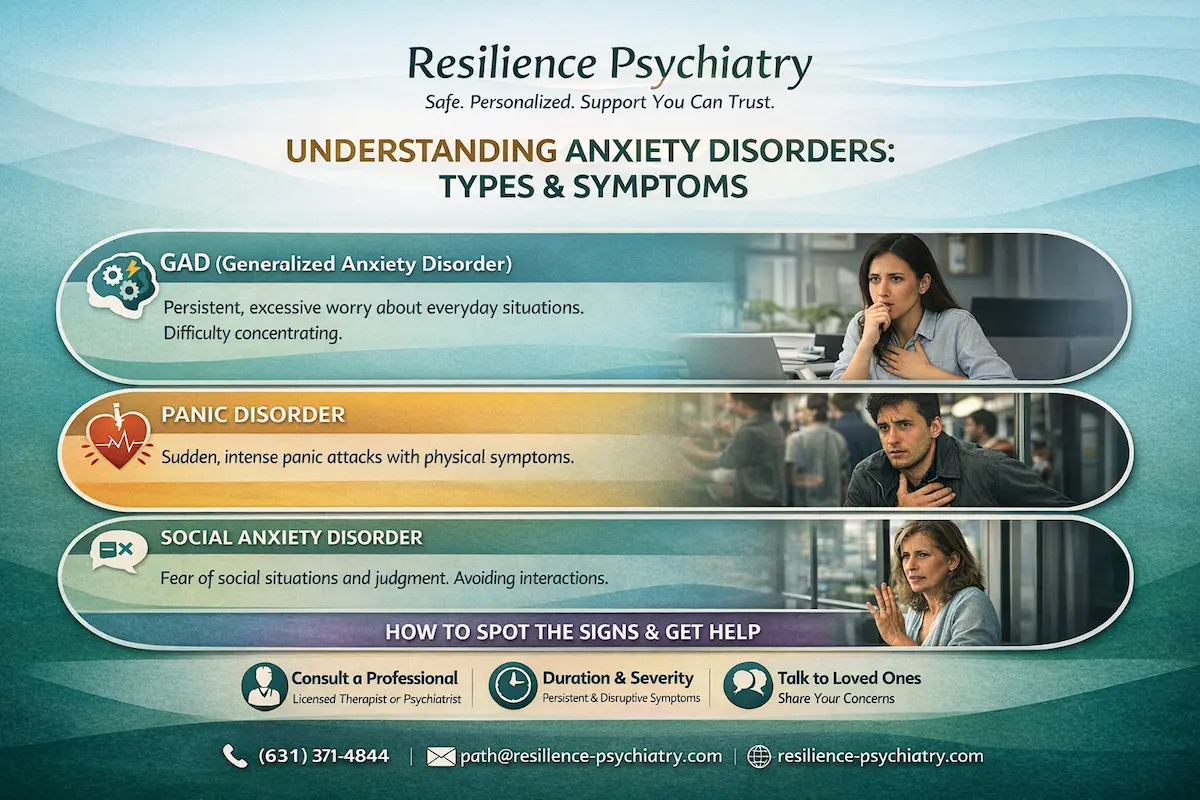
Generalized Anxiety Disorder (GAD) involves excessive, hard‑to‑control worry across multiple areas of life. It often coexists with restlessness, fatigue, and concentration problems, and can meaningfully impair daily functioning. Identifying these patterns helps guide the most appropriate treatments.
Distinguishing Features of Social Anxiety Disorder and Panic Disorder
Social Anxiety Disorder centers on an intense fear of social scrutiny and embarrassment, frequently leading to avoidance. Panic Disorder is characterized by recurrent, often unexpected panic attacks. Differentiating these conditions matters because effective treatments differ between them.
Key Symptoms Common to Anxiety Disorders
The symptoms below commonly occur across anxiety disorders; their presence and severity vary by diagnosis.
- Racing thoughts: Rapid, intrusive thinking that can feel overwhelming.
- Restlessness: A persistent inability to relax or remain still.
- Physical tension: Chronic muscle tightness or generalized bodily discomfort.
- Avoidance behaviors: Steering clear of people, places, or activities that trigger anxiety.
Recognizing these signs early increases the chance of timely intervention and better outcomes.
Physical and Emotional Symptoms Indicative of Anxiety
Anxiety can present with both bodily sensations and emotional shifts, including a racing heart, shortness of breath, and fears of losing control during intense episodes.
- Rapid heartbeat: A common physical response during episodes of anxiety.
- Shortness of breath: A sensation of breathlessness or tightness in the chest during heightened anxiety.
- Fear of losing control: Intense feelings of panic or doom during acute episodes.
Physical and Emotional Symptoms Indicative of Anxiety Description
Rapid heartbeat A typical physiological reaction seen with anxiety or panic.
Shortness of breath Sensation of restricted breathing or shallow breaths during heightened anxiety.
Fear of losing control An intense apprehension during episodes that can feel disorienting and overwhelming.
Recognizing these symptoms helps patients and clinicians take prompt, appropriate steps to reduce distress.
Variations in Symptoms Across Different Anxiety Disorders
Although anxiety disorders share many symptoms, each condition has distinguishing features and patterns. Understanding these differences supports accurate diagnosis and a tailored treatment plan.
Overview of Treatment Options for Anxiety Disorders
Treatment commonly combines psychotherapy, medications, and mindfulness or relaxation strategies. Blending multiple approaches often produces the best results.
- Psychotherapy: Treatments such as CBT that address unhelpful thoughts and behaviors.
- Medication management: Antidepressants and other medications to reduce symptom severity.
- Mindfulness techniques: Practices that build resilience and lower stress.
Discussing these options with a clinician helps identify the best plan for your situation.
Support Provided by Medication Management in Anxiety Treatment
Medication management includes careful selection, follow‑up, and coordination with psychotherapy when appropriate.
- Structured process of prescribing: Choosing medications based on diagnosis, history, and treatment goals.
- Monitoring and adjusting medications: Ongoing visits to evaluate benefits, side effects, and need for change.
- Combining with psychotherapy: Coordinating medication and therapy to enhance overall outcomes.
When combined with therapy and regular follow‑up, medication management can improve symptom control and daily functioning.
Role of Psychotherapy, Including Cognitive Behavioral Therapy, in Anxiety Management
Psychotherapy, particularly CBT, addresses the thoughts and behaviors that maintain anxiety and teaches practical skills for long‑term coping.
- Identifying thought patterns: Learning to recognize and reframe negative thinking that fuels anxiety.
- Building coping strategies: Developing practical tools to manage stress and reduce symptoms.
- Improving relationships: Strengthening communication and social skills to lessen interpersonal anxiety.
Therapy equips people with lasting skills to manage anxiety and improve daily functioning.
Enhancing Access to Anxiety Disorder Care Through Telepsychiatry
Telepsychiatry increases access to specialist care for people who can’t easily attend in‑person visits, helping maintain continuity and improving convenience.
- Convenience of care: Receiving treatment from home, reducing travel and time barriers.
- Flexible scheduling: Appointments that fit around work, school, and family needs.
- Comfortable environment: Speaking with a clinician from a familiar setting can make it easier to open up.
Telepsychiatry can be an effective and practical component of an anxiety treatment plan.
Benefits of Telepsychiatry for Anxiety Treatment
Telepsychiatry offers practical advantages that can improve engagement and continuity of care.
- Convenience: Eliminates travel and reduces the time burden of appointments.
- Continuity of care: Easier scheduling helps maintain regular follow‑up.
- Accessibility: Connects patients with specialists who may not be available locally.
These benefits make telepsychiatry a valuable option for many people seeking treatment.
Integration of Telepsychiatry with Medication and Psychotherapy
Telepsychiatry can be combined with in‑person or virtual psychotherapy and medication management to deliver coordinated, comprehensive care.
- Comprehensive psychiatric care: Virtual visits that support evaluation, medication management, and collaboration with therapists.
- Personalized treatment plans: Working together to design strategies that fit the person’s life and goals.
- Continuity of care: Ongoing monitoring and timely adjustments to treatment as needed.
This integrated approach helps ensure consistent support and better clinical outcomes.
Guidance on Finding the Best Psychiatrist for Anxiety Disorders
Choosing the right psychiatrist means considering qualifications, clinical approach, and how well the clinician fits your needs.
- Look for board‑certified psychiatrists: Certification reflects standardized training and competence.
- Check for comprehensive evaluations: Prefer clinicians who perform thorough assessments to understand your unique presentation.
- Inquire about treatment approaches: Ask how the psychiatrist combines therapy, medication, and lifestyle strategies to align with your preferences.
These considerations help you find a psychiatrist who provides skilled, compassionate care.
Important Qualifications and Experience to Consider in Psychiatrists
When evaluating psychiatrists, prioritize board certification, documented experience treating anxiety disorders, and an evidence‑based, empathetic approach.
- Board certification: Confirms the clinician has met professional standards for practice.
- Experience in treating anxiety: Look for a track record managing a range of anxiety presentations.
- Compassionate approach: Choose clinicians who listen closely and partner with patients in care planning.
These qualities influence the quality of assessment, the accuracy of diagnosis, and the therapeutic relationship.
Personalized Care Provided by Resilience Psychiatry
Resilience Psychiatry offers individualized care through structured evaluations, tailored medication plans, and flexible telepsychiatry options designed to meet each person’s needs.
- Comprehensive evaluations: Thorough assessments that identify the factors driving anxiety.
- Medication management: Personalized medication strategies with close follow‑up.
- Telepsychiatry services: Virtual appointments that improve access and continuity of care.
Our goal is to help patients and families navigate anxiety with evidence‑based treatment and ongoing support.
Frequently Asked Questions
What are the long-term effects of untreated anxiety disorders?
Without treatment, anxiety disorders can cause chronic stress that raises the risk for physical problems such as heart and digestive conditions, and may impair immune function. They also increase the chance of developing secondary mental health issues like depression or substance misuse, and can lead to social isolation, strained relationships, and reduced work or school performance. Early evaluation and treatment reduce these long‑term risks.
How can family and friends support someone with anxiety disorders?
Family and friends can help by listening without judgment, validating the person’s experience, and offering steady support. Encouraging professional evaluation and treatment, joining calming activities like walks or mindfulness practice, and respecting boundaries during difficult moments can all reinforce recovery.
Are there any natural remedies for managing anxiety?
Certain complementary strategies can help reduce symptoms but should not replace professional care. Mindfulness meditation, yoga, and breathing exercises support relaxation. Some people find herbal options (for example, chamomile or lavender) helpful, but always consult a healthcare provider before starting supplements. Regular exercise and a balanced diet also support mental health.
What role does diet play in managing anxiety disorders?
Diet influences mood and brain function. A balanced eating pattern with whole grains, fruits, vegetables, lean proteins, and healthy fats helps stabilize blood sugar and supports cognitive function. Nutrients like omega‑3s, magnesium, and B vitamins can be beneficial, while excess caffeine, sugar, and processed foods may worsen anxiety. Nutrition is a useful adjunct to clinical treatment.
How can mindfulness practices help with anxiety management?
Mindfulness practices such as meditation and gentle yoga reduce rumination and increase present‑moment awareness. Over time they improve emotional regulation and resilience to stress, helping people respond more calmly to anxiety triggers. Regular practice integrated into daily life supports long‑term management.
What should I expect during a psychiatric evaluation for anxiety?
During a psychiatric evaluation you can expect a careful review of symptoms, medical and psychiatric history, and significant life events. The clinician will ask targeted questions to assess severity and impact and may perform a mental status examination. The assessment informs a personalized treatment plan tailored to your needs.
How can I differentiate between normal anxiety and an anxiety disorder?
Normal anxiety is a temporary response to stress and can be adaptive. An anxiety disorder involves persistent, excessive worry or fear that interferes with daily life or leads to avoidance. If anxiety is ongoing, intense, or disrupts work, school, or relationships, a clinical evaluation can determine whether a disorder is present.
If you’re seeking a comprehensive assessment, consider an adult psychiatric evaluation to clarify your symptoms and treatment options.
Start With a Conversation
Whether you are seeking answers for yourself or someone you love, a psychiatric evaluation is the first step toward clarity. Our team provides compassionate, evidence-based care in Setauket, NY and via telehealth across New York and Florida.
Resilience Psychiatry | Setauket, NY | Serving New York and Florida via Telehealth